Virat Kohli Reveals the Darkest Moment of His Cricketing Career

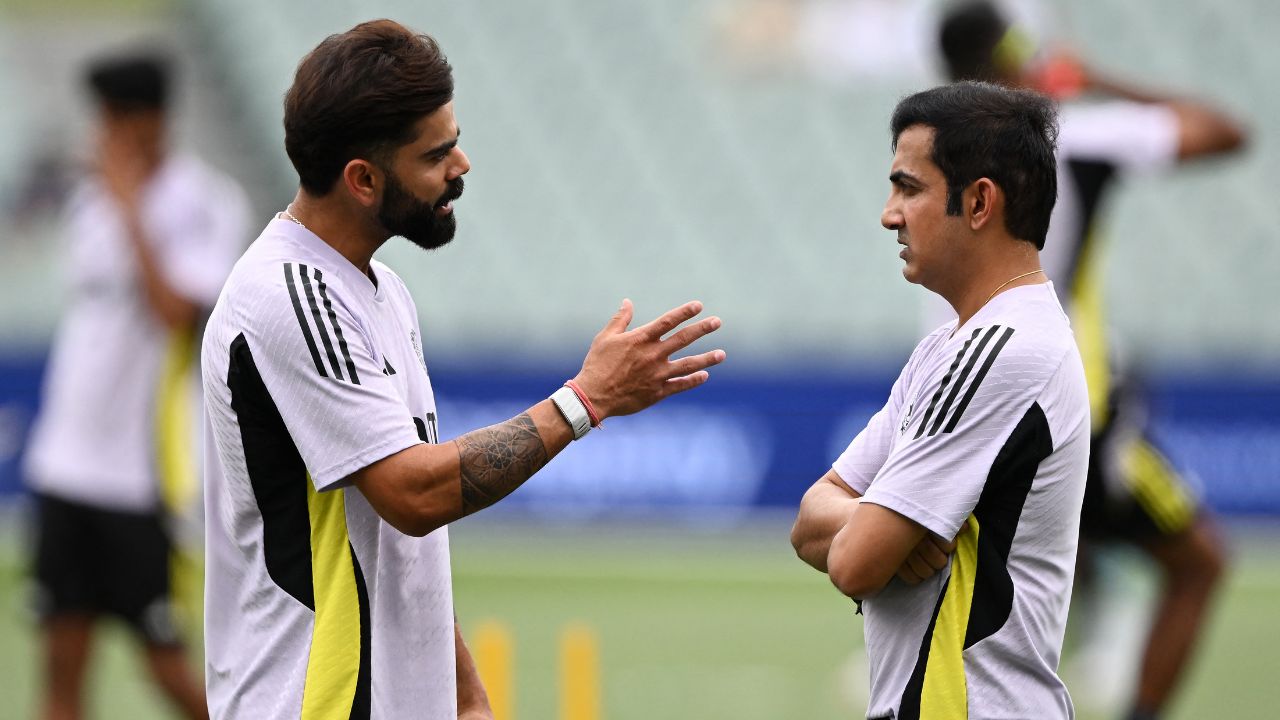
The Unspoken Struggle Behind the Legend
Virat Kohli stands today as one of the most iconic figures in international cricket, a man who has conquered nearly every challenge the game has to offer. With an illustrious career spanning nearly two decades, he has transitioned from a fiery young talent into a global idol. However, despite his current standing at the pinnacle of the sport, Kohli recently peeled back the layers of his journey to reveal a memory that remains painful—a period far more difficult than the public might have anticipated.
For years, fans and analysts have speculated on what might have been the lowest point in his professional life. Common theories often circle back to the heartbreak of the 2023 World Cup final or the complex circumstances surrounding his removal as captain in 2021. Yet, in a candid admission at the RCB Innovation Lab, the maestro clarified that none of these events hold the weight of his 2014 nightmare.
The 2014 England Tour: A Test of Mental Fortitude
Reflecting on the tour, Kohli identified the 2014 series against England as the single most challenging phase of his cricketing career. During this time, he was not yet the composed, dominant force he is today. The tour, which spanned across iconic venues like Lord’s, The Oval, and Old Trafford, was intended to be his statement to the world, but it quickly became a battle for his own confidence.
The statistics from the Test series paint a grim picture of that summer. Across ten innings, the young batter struggled immensely, accumulating only 134 runs at a disheartening average of 13.40. He found himself repeatedly caught in the traps set by England’s premier pacers, Stuart Broad and James Anderson, who exploited every weakness in his technique.
“2014 England tour was the toughest cricketing phase I’ve encountered,” Kohli admitted during the event. “I was trying to be confident, but I would wake up everyday and I knew I was going to fail. I was like, ‘How do I handle this?’ Your competitive voice in your head is saying you have to do it. The Test series finished and we had an ODI series. I was confident, prepared well and literally my legs were shaking when I was approaching the crease.”
A Continued Struggle in White-Ball Cricket
The adversity did not end with the Test matches. The ODI series proved equally punishing, as Kohli struggled to find his rhythm. In four matches, he managed just 54 runs at an average of 18.00. The dominance of bowlers like Chris Woakes, Ben Stokes, and James Anderson kept him under constant pressure, leaving him searching for answers in a foreign environment.
His only glimpse of reprieve came in a lone T20I appearance, where he fought to chase a target of 181. Despite scoring 66 runs, the rest of the batting order faltered, leading to a narrow three-run defeat. Reflecting on this, Kohli noted the raw mental shift he attempted: “I promised myself one thing before the bowler started running in, that I’m going to try to hit every ball out of the ground to break the shackles. I got out for zero but I had smashed the ball. I walked back relieved.”
The Road to Redemption and Greatness
What makes this admission so profound is the context of his career trajectory. Even though 2014 was a turbulent year, Kohli’s resilience ensured it was not the end of his dominance. In the very same year, his overall ODI average remained a respectable 58.56, proving that even at his worst, he was still performing at a level many would envy. From that point on, he evolved into a record-breaking machine.
His subsequent peaks in 2016 and 2018—where he averaged 92.38 and 133.56 respectively—solidified his reputation as one of the greatest to ever play the game. With over 14,700 ODI runs to his name, Kohli’s career serves as a testament to the fact that greatness is not defined by the absence of failure, but by the ability to endure it. His story remains a powerful reminder to young athletes everywhere that even the greatest icons once felt the paralyzing weight of doubt, and that moving forward is the only way to write a legacy.