Ajit Agarkar Sets Strict Fitness Standards for Rohit Sharma and Virat Kohli

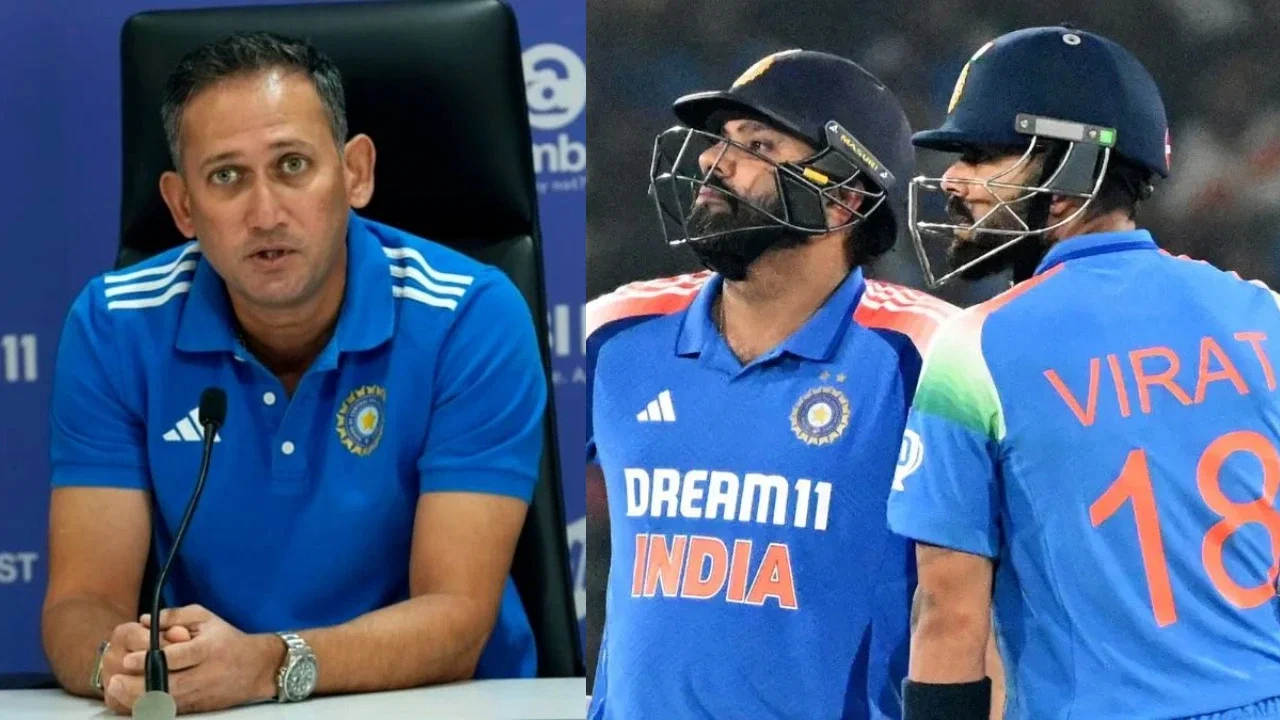
A New Era of Accountability in Indian Cricket
The landscape of Indian cricket is shifting as the senior men’s selection committee, spearheaded by Ajit Agarkar, prepares to finalize the squad for the upcoming ODI series against Afghanistan. Beyond the immediate challenge of the series, the committee is engaged in a broader, more strategic mission: constructing a robust roadmap toward the 2027 ODI World Cup. This long-term vision has brought the future roles of two of India’s most decorated batters, Rohit Sharma and Virat Kohli, into sharp focus.
The Road to the Afghanistan Series
India is set to host Afghanistan for a significant bilateral engagement, commencing with a one-off Test match in Mullanpur on June 6. This will be followed by a three-match ODI series, an ideal testing ground for young talent and seasoned campaigners alike. The fixtures are scheduled for June 14 in Dharamsala, June 17 in Lucknow, and June 20 in Chennai. Speculation is high that Shubman Gill will take the reins as captain for the ODI leg, signaling a potential transition in leadership dynamics.
Strict Fitness Standards: The New Baseline
Reports from The Times of India indicate that the selection committee is prioritizing physical conditioning above all else. In the lead-up to the 2027 World Cup, no player will be immune to the rigorous demands of international cricket. Ajit Agarkar’s committee has made it clear that fitness is not a variable, but a prerequisite. For veterans like Rohit Sharma, this is a critical juncture. Rohit’s recent struggle with a hamstring injury, which restricted his participation in the IPL and limited him to an ‘Impact Player’ role, has not gone unnoticed. The management requires absolute certainty regarding a player’s ability to endure the physical toll of 100-over cricket before granting them a place in the squad.
Comparing the Forms of Two Icons
While both Kohli and Rohit are legends of the game, their current trajectories heading into this selection phase are starkly different. Virat Kohli continues to exhibit stellar form. His consistency in recent outings, including a dominant series against New Zealand where he averaged 80 with a strike rate exceeding 105, solidifies his indispensability. With a career record of 14,797 runs in 311 ODIs, including 54 centuries, Kohli remains the bedrock of the Indian batting order. His historic achievement of surpassing Sachin Tendulkar’s record for the most centuries in ODI cricket during the 2023 World Cup has only cemented his legacy further.
Conversely, Rohit Sharma faces mounting pressure. Having averaged only 20.33 in the recent ODI series against New Zealand, his form has been inconsistent. Despite his illustrious career—boasting 11,577 runs and 33 centuries in 282 matches—the selectors are weighing the reality of the calendar. By the time the 2027 World Cup arrives, Rohit will be 40, while Virat will be 38. These age-related factors, combined with current fitness concerns, have sparked intense internal discussions regarding how long these legends can continue to serve the national side in the 50-over format.
Looking Toward 2027
The committee’s philosophy is straightforward: every match is an audition. The management is committed to finalizing the best possible combination for the future, and this means no spots are guaranteed. While Kohli’s current rhythm makes him a lock for the Afghanistan series, Rohit’s inclusion will depend heavily on his recovery and his ability to prove his match fitness to the selectors. The upcoming series against Afghanistan is more than just a contest; it is a glimpse into the strategic direction of Indian cricket, where legacy will be balanced against the harsh realities of age and the uncompromising requirements of modern athletic fitness.
As the selection committee convenes, the primary goal remains clear: building a team that can compete at the highest level in 2027. Fans and critics alike will be watching closely to see how these legendary figures navigate this challenging phase of their careers under the new, stringent selection policy.