The Unfulfilled Dream: Why Bangladesh Needs a National Cricket Museum

A Missing Chapter in Our Sporting Narrative
Today, May 18, is International Museum Day. This year’s theme, ‘Museums Uniting a Divided World,’ carries a profound message that resonates deeply with the sporting landscape of Bangladesh. In a world that often feels fractured, museums serve as more than just static storehouses for artifacts. They are vital cultural bridges, connecting the struggles and triumphs of the past with the present, and fostering a sense of shared empathy and understanding across generations. Yet, while Bangladesh has dedicated museums for its liberation struggle, military history, and even currency, it completely lacks a permanent space for the one cultural force that unites its people across lines of religion, class, and politics: cricket.
The Weight of Our Shared Journey
Since the dawn of our independence, the collective journey of Bangladesh cricket has brought the nation moments of immense pride, heartbreaking defeats, and unbridled joy. These emotions are not merely fleeting; they are built upon decades of sacrifice, sweat, and historic achievement. However, the Bangladesh Cricket Board (BCB) currently lacks a proper institutional archive to curate this legacy. As someone who has dedicated over 25 years to the pursuit of cricket memorabilia, I see clearly what we are losing with every passing year of inaction. History that is not documented is history that is eventually forgotten.
Global Benchmarks and the Absence of Bangladesh
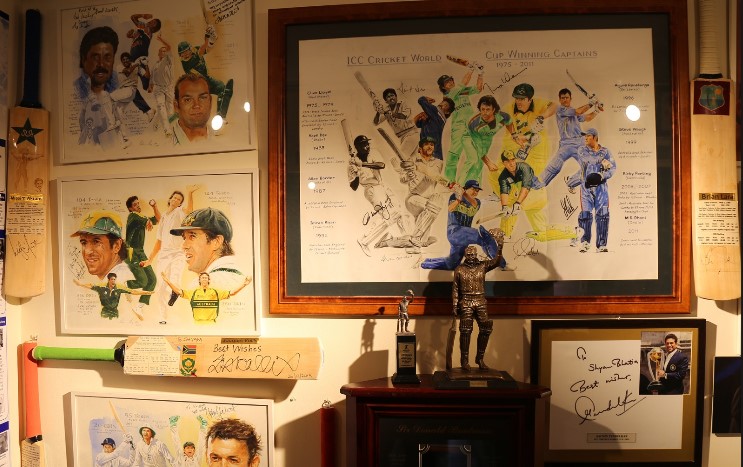
The global culture of preserving cricketing heritage is well-established and thriving. Since the Marylebone Cricket Club (MCC) opened its celebrated museum at Lord’s in 1953, nearly every Test-playing nation has established an institutional memory palace to honor its sporting icons. From the iconic Bradman Museum in Australia to the newly minted Sri Lanka Cricket Museum, the world recognizes that a nation’s sporting history is a national treasure. Even private collectors have stepped up; in Colombo, the Cricket Club Cafe displays treasures like Sir Garry Sobers’ 1968 bat, while in Dubai, industrialist Sham Bhattia houses a collection that includes artifacts from global greats, including our own Shakib Al Hasan. When visiting these international institutions, the glaring absence of a dedicated Bangladeshi space is impossible to ignore. At Lord’s, our rich history is represented by a single item: the bat Aminul Islam Bulbul used during our historic debut Test. Our most precious moments, which have made millions of fans leap from their chairs in celebration, are commemorated in London, Wellington, and Dubai—but never in Dhaka.
Bridging the Void: Past Efforts and Future Potential
Over the years, enthusiasts have attempted to fill this void through temporary exhibitions. In 2011, a landmark cricket memorabilia exhibition was organized at the Russian Cultural Centre, followed by another at the National Museum in 2013. The Bangladesh Cricket Supporters’ Association (BCSA) continued these efforts with festivals held at the Drik Gallery and the National Museum between 2014 and 2017. These events were more than just displays; they were celebrations of our national identity. They showcased signed bats from legends like Tendulkar and Lara, match-worn gear from the likes of Tamim Iqbal and Mushfiqur Rahim, and historic tickets from iconic victories, such as our first ODI win and the 2008 triumph over India. The public response was overwhelming, proving that the hunger for our own sporting history is vast and deeply felt.
A Call to Action for the BCB
The wonder on the faces of visitors at these temporary exhibitions proved one thing: we have the history, and we have the artifacts, but we lack the institutional will to secure them. Temporary galleries are not enough; they leave our heritage vulnerable, forcing us to pack away our past into cardboard boxes the moment the doors close. Establishing a permanent museum requires meticulous research and institutional commitment. It could start as a dedicated wing at the Sher-e-Bangla National Stadium and eventually evolve into a self-sustaining attraction through ticketing and tourism. To the leadership of the BCB and the Ministry of Youth and Sports, the message is clear: the time for waiting is over. Much like the sentiment once shared by Pablo Picasso, who famously remarked, ‘Give me a museum and I will fill it,’ we have the collection ready. Give Bangladesh a cricket museum, and we will ensure it becomes a testament to the spirit and heart of our nation.