Faheem Ashraf Names Suresh Raina as Idol While Taking Swipe at Indian Cricketers

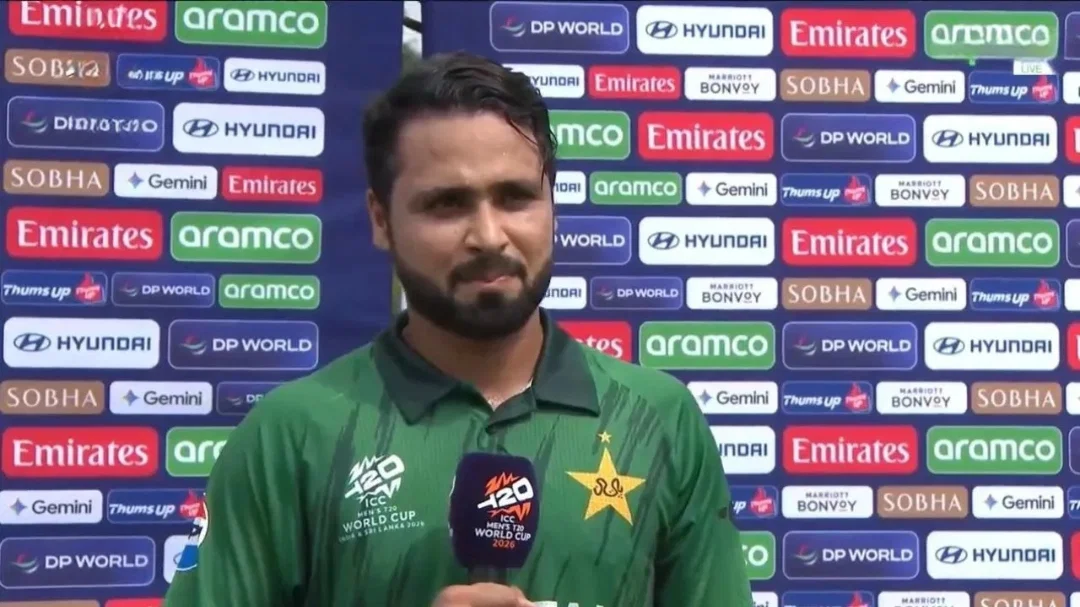
An Unexpected Revelation from the All-Rounder
In the high-stakes world of international cricket, where the India-Pakistan rivalry remains one of the most intense and scrutinized dynamics in sports, any comment crossing the border carries significant weight. Recently, Pakistani all-rounder Faheem Ashraf found himself at the center of a fresh debate. During a candid appearance on a YouTube podcast, Ashraf opened up about the cricketers who shaped his game, offering a mix of nostalgia and pointed commentary on the state of professional relations in the current era.
While Ashraf showered praise on several legends of the game, it was his decision to name former Indian powerhouse Suresh Raina as an idol that caught many by surprise. By placing Raina in a pantheon that included global icons, Ashraf signaled a deep respect for the skills of the former Indian middle-order maestro, whose contributions to white-ball cricket remain legendary.
The Icons Who Shaped a Career
When asked about the players who inspired his batting technique and mindset, Ashraf provided a list that spans continents and eras. The Pakistan star looked back at the greats who defined excellence, starting with the legendary Saeed Anwar. Anwar, widely regarded as one of Pakistan’s most elegant and destructive openers, changed the blueprint for aggressive batting in the 1990s. His ability to dismantle world-class pace attacks with grace and timing remains a hallmark of his career, during which he amassed over 8,800 ODI runs and more than 4,000 Test runs.
Ashraf also highlighted the influence of West Indies icon Chris Gayle, the self-proclaimed ‘Universe Boss.’ Gayle’s impact on the evolution of T20 cricket is undeniable, with his sheer power-hitting transforming the sport into a global spectacle. Rounding out his batting idols was Sri Lankan legend Kumar Sangakkara, a master of consistency and technical brilliance, whose record of over 12,000 Test runs and 14,000 ODI runs serves as a benchmark for batters worldwide.
The Controversy: A Dig at Modern Relations
The conversation took a sharp turn when Ashraf addressed the contrast in how players from the two nations view one another. While praising Raina—a key figure in the MS Dhoni era known for his aggressive batting and exceptional fielding—Ashraf suggested that a cultural divide persists.
“My idols with the bat were Saeed Anwar, Gayle, Sangakkara, and Raina,” Ashraf stated. “Indian players may have restrictions and perhaps cannot openly talk about us, but we have no issues naming them.” These remarks have been interpreted as an indirect dig at the current generation of Indian cricketers, suggesting that political and social pressures prevent them from expressing admiration for their Pakistani counterparts, a stark contrast to the freedom enjoyed by Pakistani players to praise Indian talent.
Bowling Prowess and the Legacy of Mohammad Asif
Beyond the batting lineup, Ashraf did not hesitate to identify his inspiration on the bowling front. He chose former Pakistani pacer Mohammad Asif. Despite a career that was cut short due to the infamous spot-fixing scandal, Asif is frequently cited by peers as one of the most skilled practitioners of swing and seam bowling to ever grace the field.
“With the ball, I idolized Mohammad Asif. He was truly inspiring,” Ashraf reflected. Asif’s mastery over the movement of the ball, both ways, often left the world’s greatest batters completely bewildered. With 106 wickets in just 23 Tests, his statistical efficiency and the sheer difficulty he posed to opposing lineups ensure his name remains legendary in Pakistani cricket circles, even if his professional journey ended in controversy.
A Divided Reaction
The sporting community has responded to Ashraf’s comments with mixed emotions. While many cricket purists have praised his willingness to transcend political boundaries and acknowledge the greatness of legends like Raina, others have taken offense to his criticism of the current Indian cricket establishment. As the India-Pakistan discourse continues to evolve, Ashraf’s comments serve as a reminder that for the players, the game is often about respect, while the environment surrounding it remains as complex as ever.